Contact Info
MOTO payment processing allows businesses to accept credit card payments by phone or mail without the customer present—using just a virtual terminal and internet connection.

MOTO stands for Mail Order Telephone Order. It’s a type of card-not-present transaction, meaning the customer’s physical card never touches your payment terminal. Instead, they give you their payment details remotely—usually by phone, sometimes by mail or fax—and you manually enter that information into a payment system to process the charge.
The process is simple. A customer calls to place an order or pay a bill. They provide their card number, expiration date, CVV code, and billing address. You enter those details into what’s called a virtual terminal, which is basically a secure web-based form that processes payments just like a physical card reader would. The transaction gets authorized in real time, and you both receive confirmation within seconds.
What makes MOTO different from online payments is who’s doing the data entry. With e-commerce, the customer types in their own information. With MOTO, you or your staff enter it on their behalf. That small difference has big implications for security, fees, and compliance—but we’ll get to that.

You don’t need much to start accepting MOTO payments. No expensive hardware. No complicated integrations. Just three things: a merchant account, a virtual terminal, and an internet connection.
Your merchant account is what allows you to accept card payments in the first place. It’s the account where funds from customer transactions are held temporarily before being transferred to your business bank account. Most payment processors will set this up for you as part of their service.
The virtual terminal is where the magic happens. It’s a secure, browser-based interface—think of it like an online form—that you access through your payment processor’s platform. You log in, enter the customer’s card details, hit submit, and the payment processes. Some processors include virtual terminal access at no extra cost. Others charge a small monthly fee. Either way, it’s far cheaper than building out a full e-commerce site.
And that’s it. As long as you have a computer, tablet, or smartphone with internet access, you can process MOTO payments from anywhere. Your office. Your truck. A job site. Even your home. The flexibility is one of the biggest reasons businesses in Virginia, Maryland, and DC still rely on MOTO despite all the newer payment technologies out there.
One thing to note: some processors restrict MOTO by default because of the fraud risks involved. Make sure it’s enabled on your account before you try to process your first transaction.
MOTO isn’t for everyone, but for certain businesses, it’s essential. If you regularly talk to customers on the phone and need to collect payment during that conversation, MOTO makes sense. If your customers skew older or prefer human interaction over filling out online forms, MOTO makes sense. If you’re a service provider who needs to take deposits before heading out to a job, MOTO makes sense.
Restaurants use it for phone-in takeout orders. A customer calls, places an order, and pays over the phone so the food is ready when they arrive. Travel agencies and hotels use it for last-minute bookings when customers are already on the road and need to secure a reservation immediately. Home service businesses—plumbers, HVAC techs, electricians—use it to collect deposits before ordering parts or scheduling work.
Professional services like consultants, accountants, and attorneys use MOTO to bill clients remotely without requiring them to log into a payment portal. Nonprofits use it to accept donations from supporters who call in during fundraising campaigns or respond to mail solicitations. Healthcare providers use it to collect co-pays and outstanding balances over the phone.
What these businesses have in common is that they interact with customers remotely, often in real time, and need a payment method that doesn’t interrupt the flow of that interaction. MOTO lets you close the sale or secure the payment right there on the call, which reduces the chance of non-payment and keeps your cash flow moving.
The other common thread is customer preference. Not everyone wants to enter their card details on a website. Some people don’t trust online forms. Others find them confusing. Some don’t have internet access at the moment they’re ready to pay. For these customers, speaking to a real person and providing payment information verbally feels safer and more straightforward. MOTO meets them where they are.
Want live answers?
Connect with a Merchant Pro Inc expert for fast, friendly support.
Because the card isn’t physically present during a MOTO transaction, there’s no way to verify that the person on the phone actually has the card in their hand. That creates risk. Stolen card numbers can be used more easily. Fraud rates are higher. Chargebacks are more common. And because of that, the payment card industry holds MOTO transactions to stricter security standards.
Every business that accepts card payments—MOTO or otherwise—must comply with PCI DSS, the Payment Card Industry Data Security Standard. These are the rules that govern how you handle, store, and transmit cardholder data. For MOTO specifically, compliance gets more complicated because your staff is hearing or seeing full card numbers, which increases your exposure.
The key is to never store sensitive card data unless your system is certified to do so. No writing down card numbers on sticky notes. No saving them in a spreadsheet. No keeping them in an email. Once you’ve entered the payment details into your virtual terminal and processed the transaction, that information should disappear from your environment. Most modern payment processors handle this automatically through tokenization, which replaces the actual card number with a random string of characters that can’t be reverse-engineered.
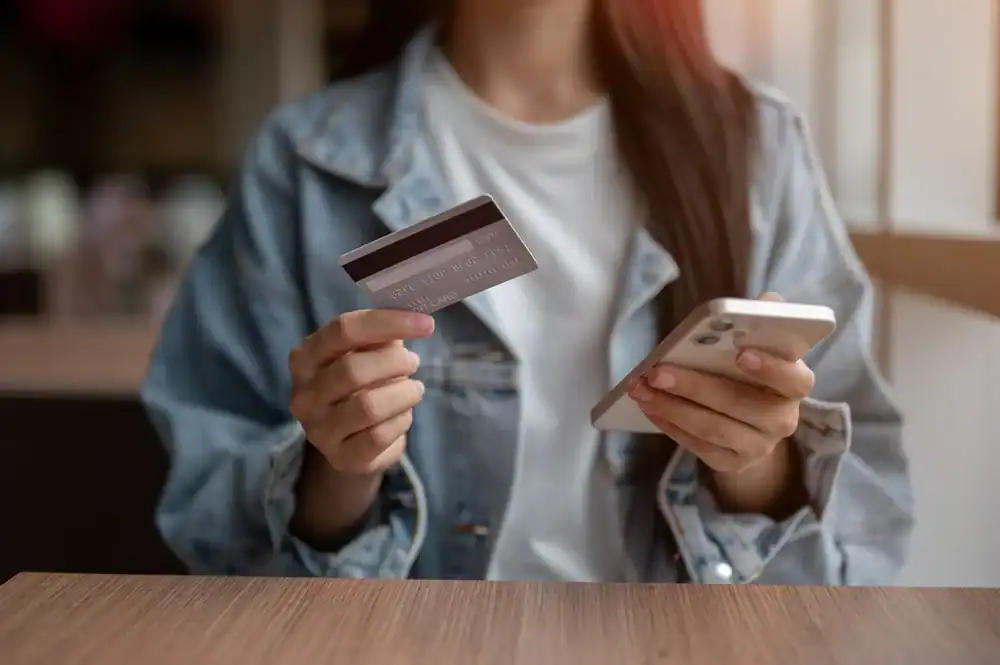
Even with PCI compliance in place, you need additional layers of protection to minimize fraud and chargebacks. The good news is that most payment processors offer built-in tools designed specifically for card-not-present transactions.
Address Verification Service, or AVS, is one of the most effective. It compares the billing address the customer provides with the address on file at their card-issuing bank. If they don’t match, the transaction gets flagged. It’s not foolproof—someone could know the cardholder’s address—but it catches a lot of fraudulent attempts.
CVV verification is another must-have. The CVV is that three- or four-digit code on the back of the card. Requiring it proves the person on the phone has the physical card in front of them, not just a stolen card number. Most processors won’t even let you process a MOTO payment without collecting the CVV.
Beyond those basics, you can set up velocity filters that flag unusual activity—like multiple transactions from the same IP address in a short time, or unusually large purchases that don’t match your typical order size. You can also require additional verification for high-dollar transactions, like calling the customer back at a known number or asking for a photo ID.
Training your staff to recognize red flags is just as important as the technology. Rush orders with overnight shipping to a different address than the billing address. Customers who don’t know basic details about their own account. Orders that are unusually large for a first-time customer. These are all signs that something might be off, and it’s worth taking an extra minute to verify before processing the payment.
The goal isn’t to make it difficult for legitimate customers. It’s to create enough friction that fraudsters move on to an easier target. Most of these tools work in the background without the customer even noticing.
MOTO transactions cost more to process than in-person card swipes. That’s just the reality. Because the fraud risk is higher, payment processors and card networks charge higher interchange fees to cover that risk. Where a card-present transaction might cost you 1.5% plus ten cents, a MOTO transaction could run anywhere from 2.3% to 3.5% plus a per-transaction fee.
The exact rate depends on several factors. Your payment processor’s pricing model. Your monthly transaction volume. The types of cards your customers use—rewards cards and business cards carry higher interchange rates. And how much data you’re able to capture during the transaction. Providing a full billing address and CVV code can qualify you for better rates than a transaction with minimal information.
Some processors use flat-rate pricing, where every MOTO transaction costs the same percentage regardless of card type. Others use interchange-plus pricing, which passes through the actual interchange cost set by the card networks and adds a small markup. Interchange-plus tends to be more transparent and often cheaper in the long run, especially if you’re processing a decent volume.
You should also factor in any monthly fees for virtual terminal access, though many processors include it for free. And be aware of chargeback fees, which can range from fifteen to a hundred dollars depending on your processor and how many chargebacks you’re dealing with. If you’re in a high-risk industry or have a history of disputes, those fees can add up quickly.
The higher cost is something to account for in your pricing, but it’s usually not a dealbreaker. The alternative—losing the sale entirely because you can’t accept a phone payment—costs you more. And for many businesses, the convenience and flexibility of MOTO processing more than justifies the extra percentage point or two in fees.
MOTO payment processing isn’t the flashiest payment technology out there, but it’s reliable, accessible, and still very much relevant for businesses that interact with customers remotely. If you’re taking orders by phone, serving customers who prefer human interaction, or working in the field and need a way to collect payment on the spot, MOTO gives you that flexibility without requiring expensive infrastructure.
The tradeoffs are real. Higher fees. More fraud risk. Stricter compliance requirements. But with the right tools—secure virtual terminals, AVS and CVV verification, proper staff training—you can manage those risks and offer a payment option that keeps sales moving and customers happy.
If you’re a business in DC, Virginia, or Maryland looking for transparent pricing and local support for your MOTO payment processing needs, we can help you get set up with the right system and the security measures to protect both you and your customers.
Summary:
Share: