
Contact Info


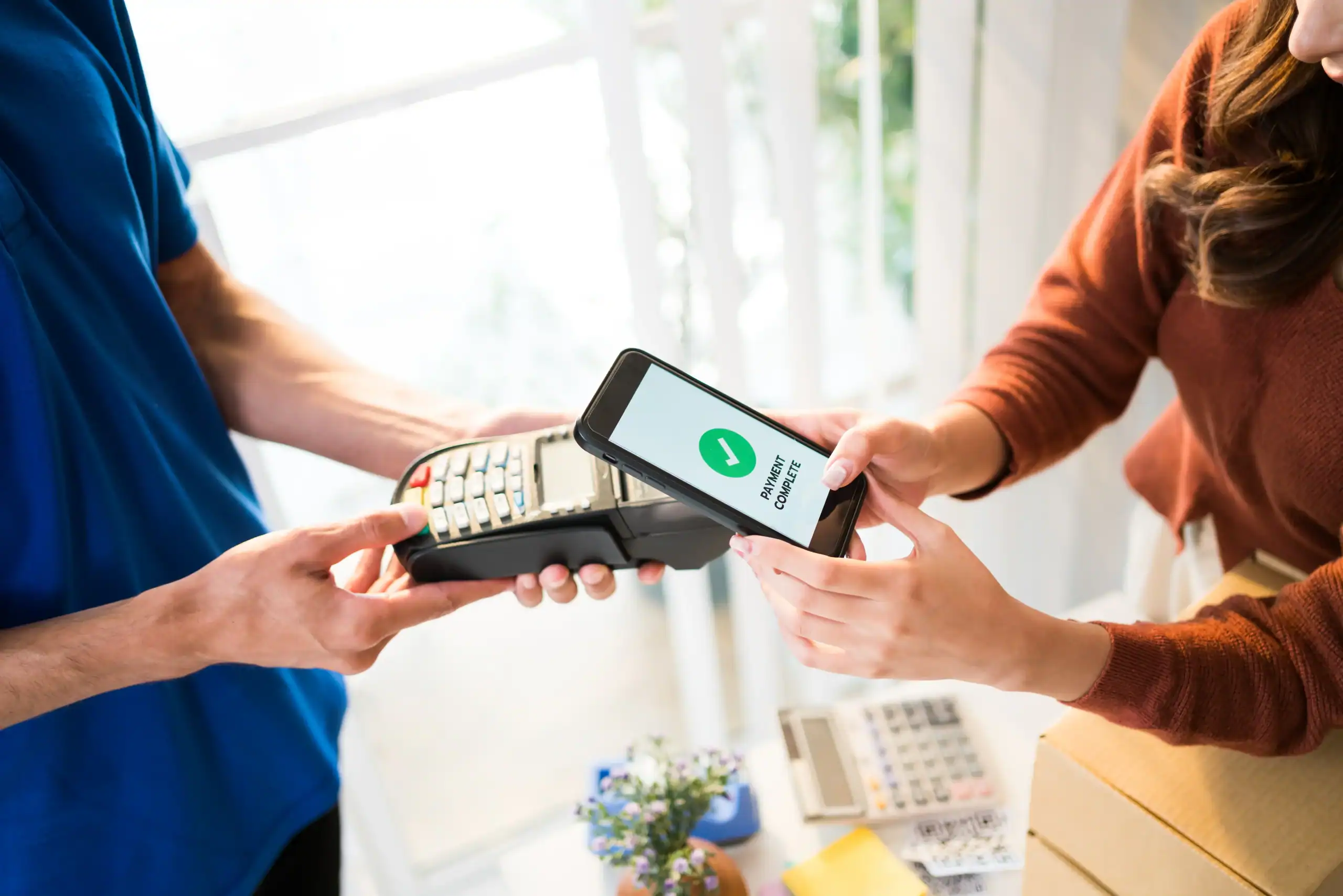
Your customers in McLean expect options. Credit cards, debit cards, Apple Pay, Google Pay, tap-to-pay—they want what’s convenient for them, not what’s easiest for you to set up.
When your payment system handles all of it without you thinking about it, you stop losing sales to “I’ll come back later” or “Do you take…?” You process more transactions. You get paid faster. Your staff spends less time troubleshooting declined cards or frozen screens.
The right merchant services setup means same-day funding when you need cash flow, real-time reporting so you know where you stand, and fraud protection that catches problems before they cost you. It’s not flashy, but it’s the difference between wondering if a payment went through and knowing it did.
We’ve been handling payment processing for over three decades. We’re a registered ISO of PNC Bank, which means we’re not some fly-by-night operation that disappears when you need help.
McLean businesses deal with high-value transactions, government contractors, professional services firms, and customers who expect everything to work perfectly. We get that. The businesses here aren’t looking for the cheapest option—they’re looking for the one that doesn’t create problems.
We set up your system based on how you actually operate, not based on what package we’re trying to sell that month. You get 24/7 support because payment issues don’t only happen during business hours. And you get transparent pricing because nobody has time to decode a statement full of fees you didn’t know existed.

First, we look at what you’re actually doing. Retail? Professional services? High transaction volumes or fewer large payments? Fleet vehicles? That determines what equipment and software you need.
Then we handle the application and underwriting. Yes, it involves paperwork, but we walk you through it instead of handing you a confusing form and disappearing. Most businesses are approved and processing within a few days.
We install your equipment—whether that’s countertop terminals, wireless devices, mobile card readers, or online payment gateways. We make sure it integrates with your existing systems instead of forcing you to change how you operate. Then we train your staff so they know what to do when something doesn’t go as planned.
After you’re live, you have access to real-time reporting and our support team. When you call, you talk to someone who can actually help you, not someone reading from a script in a call center.
Ready to get started?
You get credit and debit card processing for all major card brands. That’s the baseline. But McLean businesses often need more than that.
Fleet card processing matters here because of the number of businesses running vehicles for government contracts, consulting work, or service calls. Fleet cards give you discounts on fuel, maintenance, and tires while giving you better tracking of vehicle expenses. It’s not just about accepting payment—it’s about reducing your operating costs.
Gift and loyalty card programs help you keep customers coming back. In a market like McLean where competition is fierce and customers have options, a loyalty program gives them a reason to choose you again. You control the program, set the rewards, and use it to drive repeat business.
Wireless and mobile payment acceptance means you’re not tied to a counter. If you deliver services on-site, work events, or just want to check someone out from anywhere in your store, you can. Online payment acceptance and gateway integration let you take payments through your website or over the phone without manually entering card numbers into a terminal.

You’ll pay a percentage of each transaction plus a small per-transaction fee. The percentage varies based on the card type—debit cards cost less to process than premium rewards credit cards.
Most merchant services providers use interchange-plus pricing, which means you pay the actual interchange fee (set by Visa, Mastercard, etc.) plus a markup. That markup is where providers differ. Some charge 0.20% to 0.50% above interchange. Others charge more and hide it in complicated statements.
You’ll also have equipment costs—either a flat monthly fee for rented terminals or an upfront purchase price. Monthly fees for gateway access, PCI compliance, and reporting tools typically run $20 to $50 depending on what you need. The key is making sure there aren’t surprise fees buried in your contract for things like “statement fees,” “annual fees,” or “PCI non-compliance fees” that weren’t disclosed upfront.
Standard funding is next business day for most merchants. You process transactions today, and the money hits your bank account tomorrow.
Same-day funding is available if you need faster cash flow, though it typically costs a small premium. This matters for businesses with tight cash flow or those that need to pay suppliers quickly.
The actual timing depends on when you batch out your transactions. If you process a sale at 9 PM and your system batches at 10 PM, that sale goes into the next day’s funding. Most systems batch automatically at a set time, but you can usually trigger a manual batch if you need to.
Chargebacks and disputes can temporarily hold funds, but that’s rare unless you’re in a high-risk industry. For most McLean businesses—professional services, retail, restaurants—funding is predictable and consistent.
You call support and we troubleshoot it. Most issues are simple—network connection problems, paper jams, or software glitches that reset with a reboot.
If the terminal is actually broken, we get a replacement shipped overnight or same-day depending on your service agreement. In the meantime, you can usually process payments through a mobile backup device, a virtual terminal on your computer, or by manually recording card information for later processing (though that’s not ideal for security reasons).
This is why 24/7 support matters. If your terminal dies at 6 PM on a Friday, you can’t wait until Monday to fix it. You need someone who answers the phone, understands the problem, and gets you back up and running.
Having a backup plan—whether that’s a spare terminal, a mobile card reader, or virtual terminal access—means a hardware failure doesn’t shut down your ability to accept payments.
You need different equipment, but it should all run through the same merchant account. In-person sales use a physical terminal or mobile card reader. Online sales use a payment gateway that connects your website to your merchant account.
The gateway handles the technical side—encrypting card data, communicating with the card networks, and returning an approval or decline. You integrate it with your website’s shopping cart or use a virtual terminal to manually enter card information for phone orders.
Pricing is usually slightly higher for online transactions because they’re “card-not-present,” which carries more fraud risk. You might pay an extra 0.30% to 0.50% compared to in-person transactions.
The advantage of running everything through one provider is unified reporting. You see all your transactions—in-person, online, and mobile—in one dashboard. You get one statement, one deposit, and one point of contact for support.
Modern merchant services use real-time fraud detection that analyzes transactions as they happen. The system looks for red flags—unusual purchase amounts, mismatched billing addresses, velocity patterns that suggest stolen cards, or geographic anomalies.
When something looks suspicious, the system either declines the transaction automatically or flags it for review. You can set your own risk thresholds based on your business. A high-end retailer might accept more risk to avoid declining legitimate customers. A business with thin margins might set stricter controls.
EMV chip cards and contactless payments are more secure than magnetic stripe transactions because they generate unique codes for each transaction. That’s why you’ll pay lower processing rates for chip and tap transactions—the card networks recognize the reduced fraud risk.
You’re still responsible for chargebacks if a customer disputes a charge, but fraud protection significantly reduces your exposure. The key is using a provider whose fraud tools actually work and don’t just decline every other legitimate transaction because the algorithm is too aggressive.
Yes, but read your contract first. Some providers lock you into multi-year agreements with early termination fees. Those fees can run hundreds of dollars, which is why you need to know what you’re signing before you sign it.
If you’re month-to-month or past your contract term, switching is straightforward. You apply with a new provider, get approved, install new equipment, and start processing. Your old provider closes your account and sends your final statement.
The hassle is retraining staff on new equipment and updating any integrated systems. If your POS software talks to your payment terminal, you’ll need to reconfigure that connection. If you have recurring billing set up, you’ll need to migrate those payment profiles.
Most businesses switch because of poor support, unexpected fees, or rate increases that weren’t disclosed. The best way to avoid switching is to start with a provider who’s transparent about pricing, responsive when you need help, and doesn’t bury surprises in the fine print. That’s what we do.
Other Services we provide in Mclean