Contact Info
Slow checkouts, inventory gaps, and security risks aren't just inconveniences—they're driving your customers straight to competitors. Here's what's really happening.
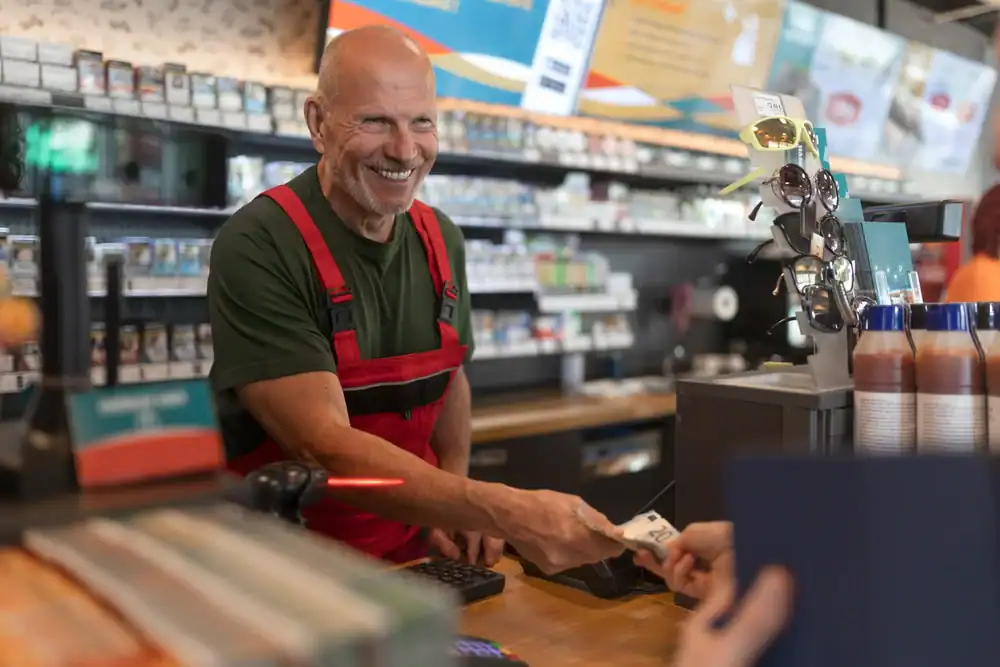
Every second counts at checkout. When your POS system lags, processes slowly, or requires multiple steps for simple transactions, you’re not just inconveniencing customers—you’re giving them a reason to shop somewhere else.
Think about it from their perspective. They’ve already decided to buy. They’re ready to pay. And then they wait. And wait some more while your system processes, or while you troubleshoot an error, or while the card reader fails to connect.
Research shows that 79% of customers won’t come back after a bad experience. In retail and hospitality, that bad experience often happens right at the point of sale. Your checkout process is the last impression you make, and outdated POS systems turn that final moment into a frustration point instead of a smooth conclusion.

Legacy POS systems weren’t built for today’s transaction volume or payment methods. If your system is more than five years old, you’re probably dealing with outdated hardware, sluggish processors, and software that wasn’t designed for contactless payments or integrated loyalty programs.
The problem compounds during your busiest hours. An extra 10 to 15 seconds per transaction doesn’t sound like much until you multiply it across dozens of customers. Suddenly, you’ve got lines out the door, frustrated shoppers checking their watches, and some people simply walking out before they even reach the register.
Modern cloud based POS systems process transactions in seconds, not minutes. They’re built to handle multiple payment types without switching between different interfaces. They update in real-time, so there’s no lag between when a customer taps their card and when the transaction completes. The difference isn’t subtle—it’s the gap between a customer who comes back and one who doesn’t.
Speed isn’t just about the technology itself. It’s about how that technology integrates with everything else you do. When your POS system doesn’t talk to your inventory management software, staff have to manually check stock. When it doesn’t integrate with your customer database, you can’t quickly pull up purchase history or loyalty points. Each of these disconnects adds seconds to every transaction, and those seconds add up to lost customers.
The customer checkout experience sets the tone for whether someone recommends your business or complains about it. In the DC, VA, and MD markets where competition is fierce, you can’t afford to lose customers over something as fixable as checkout speed. Customers have options, and they’ll use them if your system makes buying from you feel like work.
Mobile point of sale technology changes the entire dynamic of how you serve customers. Instead of forcing everyone to come to you, you can bring the transaction to them—on the sales floor, at their table, or even outside during an event or pop-up.
The mobile POS market hit $49.7 billion in 2025, and there’s a reason for that growth. Businesses that implement mPOS solutions report faster transactions, shorter perceived wait times, and higher customer satisfaction scores. When customers can check out anywhere in your store, you eliminate the bottleneck that traditional checkout counters create.
Here’s what that looks like in practice. A customer in a boutique finds something they like. Your staff member has a tablet or smartphone with your POS software. They scan the item, process the payment, and email the receipt—all without the customer leaving the fitting room area. No line. No wait. No reason to reconsider the purchase.
Restaurants see even more dramatic improvements. Servers can take orders and process payments tableside, cutting minutes off the entire dining experience. That faster table turn means you serve more customers in the same shift, without anyone feeling rushed. The technology pays for itself in increased volume alone, before you even factor in the better experience.
Mobile POS systems also give you flexibility during peak times. Running a special event? Having an unexpectedly busy Saturday? You can add temporary checkout points anywhere in your space. You’re not limited by the physical infrastructure of traditional POS terminals. This adaptability is especially valuable for retailers in high-traffic areas of Maryland, Virginia, and DC where customer flow can be unpredictable.
The customer checkout experience isn’t just about speed—it’s about removing friction. Every unnecessary step, every moment of confusion, every time a customer has to repeat information they’ve already provided—these create friction. Modern retail POS systems, especially mobile and cloud-based options, eliminate most of that friction. The result is customers who actually enjoy the buying process instead of enduring it.
Want live answers?
Connect with a Merchant Pro Inc expert for fast, friendly support.
Nothing frustrates a customer faster than being told “we’re out of that” after they’ve already decided to buy. Inventory problems don’t just cost you one sale—they cost you that customer’s trust and their future business.
Outdated POS systems create inventory blindness. You don’t know what you actually have in stock until you physically check. You can’t see what’s selling at your other location. You’re making purchasing decisions based on gut feeling instead of data. This leads to two equally expensive problems: stockouts that lose sales, and overstock that ties up your capital.
The businesses that get this right are using POS inventory management that updates in real-time across all channels. When something sells in-store, the online count adjusts immediately. When you’re running low on a popular item, you get automated alerts before you’re completely out. This isn’t luxury technology anymore—it’s standard practice for retailers who want to compete.

Small retailers sit on an average of $48,000 in excess inventory—that’s 22% of their total stock. At the same time, one in six retail stores find it practically impossible to know how much stock they’ll need in the next six months. These aren’t contradictory problems. They’re symptoms of the same issue: poor inventory visibility.
Modern point of sale systems solve this with real-time inventory tracking that shows you exactly what you have, where it is, and how fast it’s moving. You can see which products are trending up before you run out. You can identify slow movers before they become dead stock. You can transfer inventory between locations based on actual demand instead of guesswork.
The financial impact is significant. Retailers lose nearly $1 trillion annually due to stockouts and overstocks combined. That’s not a typo—trillion with a T. While your business might not be dealing with billions in inventory, the principle scales. Every time you’re out of stock on a popular item, you lose that sale. Every time you over-order something that doesn’t sell, you’ve tied up cash that could have gone to products people actually want.
Advanced POS inventory management features include automated reorder points, vendor management, and purchase order generation. When stock hits a certain level, the system can automatically create a purchase order or even send it directly to your supplier. This removes the guesswork. It eliminates the manual monitoring that eats up your time.
For businesses operating across DC, Virginia, and Maryland, multi-location inventory tracking becomes essential. You need to see all your stock in one dashboard. Transfer products between locations as needed. Fulfill orders from wherever inventory is available. Cloud-based POS systems make this possible without requiring you to be physically present at each location.
The customer-facing benefit is simple: when someone wants to buy something, you have it. You can confidently tell them it’s in stock. You can offer to ship from another location if needed. You can suggest alternatives based on real data about what’s available. This reliability builds trust, and trust builds repeat business.
Your customers don’t think in channels. They don’t care if they saw a product on Instagram, checked your website, and now they’re in your store. They just want to buy it, and they expect you to have accurate information regardless of where they’re shopping.
Omnichannel retail isn’t optional anymore—46% of business executives rank it as their top priority for 2025. The reason is clear: 75% of shoppers use both digital and physical touchpoints in the same purchase journey. If your inventory data isn’t synchronized across all these touchpoints, you’re creating confusion and losing sales.
Here’s a common scenario that outdated systems can’t handle. A customer checks your website and sees a product is in stock. They drive to your store to buy it. You tell them you’re actually out. They’re frustrated because they wasted their time, and you’ve lost both the sale and their confidence in your business. This happens constantly when POS systems don’t sync with e-commerce platforms in real-time.
Modern integrated POS solutions update inventory across every channel simultaneously. When something sells in your physical store, your online inventory count drops instantly. When someone buys online, your in-store staff can see that in real-time. This synchronization prevents overselling, reduces customer disappointment, and enables services like buy-online-pickup-in-store that customers increasingly expect.
The technical side matters less than the outcome. What you need is a single source of truth for inventory that every system pulls from. Whether a customer is browsing your website, checking your app, calling your store, or shopping in person, they should get the same accurate information. Cloud-based POS systems make this possible by centralizing data and updating it continuously.
Omnichannel capabilities also open new revenue opportunities. You can offer endless aisle functionality, where customers can order items you don’t have in stock for delivery to their home. You can enable ship-from-store, using your retail locations as mini distribution centers. You can provide accurate availability information for curbside pickup. Each of these services requires inventory synchronization that outdated POS systems simply can’t deliver.
For businesses in competitive markets like those across Maryland, Virginia, and DC, omnichannel inventory management isn’t about keeping up with trends—it’s about meeting baseline customer expectations. When your competitors can accurately tell customers what’s in stock and offer multiple fulfillment options, you need the same capabilities just to stay in the game.
Your POS system touches every part of your business—sales, inventory, customer relationships, employee management, and financial reporting. When it’s working against you instead of for you, the costs multiply quickly. Slow checkouts lose customers. Inventory gaps lose sales. Security vulnerabilities lose trust. The pattern repeats until you address the root cause.
Modern POS technology has solved these problems. Cloud-based systems provide the speed, flexibility, and real-time data that today’s businesses need. Mobile solutions eliminate checkout bottlenecks. Integrated platforms synchronize inventory across all your channels. The technology exists and it’s more accessible than you might think.
If you’re experiencing any of the issues we’ve covered—slow transactions, inventory problems, or disconnected systems—those are signals worth paying attention to. We’ve been helping businesses across District of Columbia, Virginia, and Maryland modernize their payment and POS technology since 2007, with solutions designed around how you actually operate, not how a software company thinks you should.
Summary:
Share: