
Contact Info
Credit card transactions happen in seconds, but understanding what's happening behind the scenes helps you choose the right processor and protect your margins.
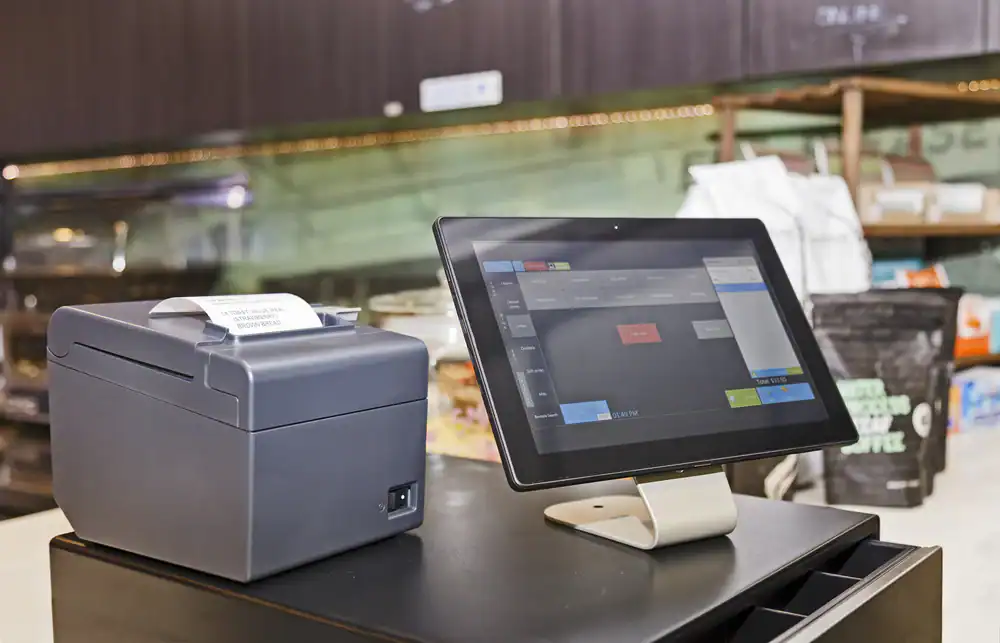
Credit card processing is the system that moves payment data and money between your customer’s bank and your business account. It happens in seconds at the register or checkout page, but involves multiple parties working together to verify, authorize, clear, and settle each transaction.
When someone pays with a card, you’re not just accepting payment. You’re initiating a verification process that checks if the card is valid, if funds are available, and if the transaction looks legitimate. Once approved, the money gets batched with your other daily transactions and transferred through your merchant account before landing in your business bank account.
The entire process typically takes one to two business days from swipe to settlement, though some processors now offer instant or same-day transfers for an additional fee. Understanding this timeline matters because it directly affects your cash flow and how quickly you can access the money you’ve earned.

Every credit card transaction involves at least six key players, and each one plays a specific role in moving money from your customer to your account. Understanding who these players are helps you see where fees come from and which costs are negotiable.
First, there’s the cardholder—your customer. They’re using a card issued by their bank, which is called the issuing bank or card issuer. The issuing bank is the institution that actually provides the credit or debit card, holds the customer’s funds, and makes the final decision on whether to approve or decline each transaction based on available credit, account balance, and fraud indicators.
Then there’s you, the merchant. To accept credit cards for your business, you need a merchant account, which is a specialized bank account designed to hold funds from card sales temporarily before transferring them to your regular business checking account. Your merchant account is maintained by an acquiring bank (also called the acquirer), which acts on your behalf and communicates with issuing banks during the transaction process.
The payment processor is the entity that actually manages and facilitates the transaction flow. It transmits payment data between you, the banks, and the card networks. The processor handles the technical side of moving information securely and quickly. Many payment processors also provide the tools you need to accept cards—terminals for in-person sales, virtual terminals for phone orders, and payment gateways for online transactions.
Speaking of payment gateways, if you sell online or process transactions through your website, you’re using gateway technology. The payment gateway is the service that captures card information from your website’s checkout page, encrypts that sensitive data, and sends it securely to your payment processor. Think of it as the digital equivalent of a physical card terminal. It’s the bridge between your e-commerce platform and the processing network.
Finally, there are the card networks—Visa, Mastercard, Discover, and American Express. These networks don’t issue cards or process payments directly. Instead, they set the rules for how transactions work, facilitate communication between issuing and acquiring banks, maintain security standards, and collect network fees on every transaction that runs through their systems.
Each of these players takes a small piece of every transaction you process. Some fees, like interchange fees, are set by the card networks and are non-negotiable. Others, like your processor’s markup, can vary significantly depending on who you work with and how much volume you process. Knowing who charges what helps you evaluate whether you’re getting a competitive deal or paying more than you should.
Credit card processing happens in three distinct stages: authorization, clearing, and settlement. Each stage serves a specific purpose, happens at a different time, and affects when you actually receive your money.
Authorization is the first stage, and it happens in real time—usually within two to three seconds. When your customer swipes, dips, taps, or enters their card information online, your terminal or payment gateway captures the card details and transaction amount. That information gets sent to your payment processor, which forwards it to the appropriate card network (Visa, Mastercard, etc.). The card network then routes the request to the customer’s issuing bank.
The issuing bank runs a series of checks. Is the card valid and not reported stolen? Does the customer have enough available credit or funds in their account? Does this transaction match the customer’s normal spending patterns, or does it look like potential fraud? If everything checks out, the bank sends back an approval code through the same chain—network to processor to your terminal. If something’s wrong, the transaction gets declined. Your customer sees the result within seconds, but a lot just happened behind the scenes.
Once a transaction is authorized, it doesn’t immediately move money. Instead, it enters the clearing stage. This typically happens at the end of your business day when you close out your terminal or when your system automatically “batches out” all the day’s approved transactions. Batching is the process of collecting all your authorized transactions and submitting them as a group to your payment processor. The processor then sends these batches to the card networks, which communicate with the issuing banks to initiate the actual fund transfers.
Settlement is the final stage, and it’s when you actually get paid. After your batch is submitted and processed, the funds move from the issuing banks to your acquiring bank. Your acquiring bank deposits those funds into your merchant account, minus processing fees. From your merchant account, the money transfers to your regular business bank account. This settlement process typically takes one to two business days, though timing can vary depending on your processor, your bank, and when you submitted your batch.
For small businesses in Virginia, Maryland, or District of Columbia, understanding these stages matters for cash flow planning. If you batch out at 6 PM on Friday, you might not see those funds until Tuesday. If you’re running tight on cash and need to make payroll or pay suppliers, that timing can create problems. Some processors offer faster funding options—same-day or even instant deposits—but they typically charge extra for that service. Whether that cost is worth it depends on how critical immediate access to funds is for your operation.
This three-stage process also explains why chargebacks are such a pain. Once a transaction is settled and the money is in your account, reversing it isn’t simple. If a customer disputes a charge weeks or months later, the entire process runs in reverse, and funds can be pulled from your account even if you’ve already spent that money. That’s why preventing chargebacks and keeping good transaction records is so important.
Want live answers?
Connect with a Merchant Pro Inc expert for fast, friendly support.
Processing fees are where most small business owners get confused and frustrated. The costs aren’t always transparent, and they can vary significantly based on how your processor structures their pricing and what types of cards your customers use.
Every time you accept a credit card, you pay a fee. That fee typically includes three main components: interchange fees set by the card networks and paid to issuing banks, assessment fees charged by Visa and Mastercard for using their networks, and your payment processor’s markup for providing the service and technology. The biggest chunk is usually interchange, which can range anywhere from 1.5% to 3.5% of the transaction amount depending on the card type and how the transaction is processed.
Understanding where these fees come from and how they’re calculated helps you evaluate processor quotes and know whether you’re paying a fair price for small business payment processing services.

Interchange fees are the largest component of your processing costs, and they’re set by the card networks—Visa, Mastercard, Discover, and American Express. These fees are paid to the issuing bank as compensation for fronting the money to the merchant and taking on the risk of fraud or non-payment. You can’t negotiate interchange fees. They’re the same for every merchant, regardless of size or volume.
But here’s what makes interchange complicated: the rates aren’t flat. They vary based on dozens of factors, and understanding these variables helps you manage your costs and know what to expect on your monthly statement.
Card type is one of the biggest factors. A basic consumer debit card carries a much lower interchange rate than a premium rewards credit card. Why? Because rewards cards cost the issuing bank more to operate—they’re paying out cash back or points to cardholders—so they charge higher interchange to cover those costs. Business cards and corporate cards typically have even higher interchange rates. If you run a business that attracts customers using premium cards, your average processing costs will be higher than a business where most customers use basic debit cards.
How you process the transaction also affects the interchange rate. Card-present transactions—where the customer physically swipes, dips, or taps their card at your location—have the lowest interchange rates because they’re considered lower risk for fraud. Card-not-present transactions, like online sales, phone orders, or manually keyed entries, carry higher interchange because there’s greater fraud risk when the physical card isn’t verified. That’s why e-commerce businesses and service providers who take payments over the phone typically see higher processing costs than brick-and-mortar retail stores.
Your industry and business type can also influence interchange. Some business categories are considered higher risk by the card networks—things like travel, subscription services, or certain online businesses—and they pay higher interchange as a result. The card networks also have special interchange categories for specific industries like gas stations, supermarkets, and utilities, each with their own rate structures.
Even transaction size can play a role. Some interchange categories have different rates for small-ticket versus large-ticket transactions. A $5 coffee purchase might be processed under a different interchange category than a $500 equipment purchase, even if both are swiped with the same type of card at the same terminal.
For businesses operating in Maryland, Virginia, or District of Columbia, this means your effective processing rate will depend heavily on your customer mix and how you accept payments. A restaurant where most customers pay with debit cards in person will have lower costs than a consulting business that invoices clients and accepts credit card payments online. Neither is being overcharged—they’re just dealing with different underlying interchange rates.
Understanding interchange helps you evaluate processor quotes more intelligently. If a processor offers you a flat rate of 2.9% for all transactions, you need to consider what your actual interchange costs are likely to be. If your average interchange is around 2.2%, you’re effectively paying the processor a 0.7% markup. For a low-volume business with simple needs, that might be a fair trade for simplicity and no monthly fees. But if you’re processing $50,000 a month, that markup adds up to $350 monthly, and you could likely negotiate better terms.
Small differences in rates create big differences in annual costs. A business processing $20,000 per month at an effective rate of 3.0% pays $600 in fees. The same business at 2.6% pays $520. That 0.4% difference equals $960 per year—money that could go toward payroll, marketing, or equipment instead of processing fees.
Payment processors structure their fees in different ways, and the pricing model you choose can have a significant impact on what you actually pay. The two most common models are flat-rate pricing and interchange-plus pricing, and each has advantages depending on your business size and transaction patterns.
Flat-rate pricing is straightforward. You pay one set percentage and per-transaction fee for every sale, regardless of what type of card your customer uses or how the transaction is processed. Companies like Square and Stripe are well-known for flat-rate pricing. They might charge something like 2.6% plus 10 cents for in-person transactions and 2.9% plus 30 cents for online transactions. What you see is what you pay.
The appeal of flat-rate pricing is simplicity and predictability. You know exactly what each transaction will cost before you process it. There are typically no monthly fees, no setup costs, no annual fees, and no long-term contracts. For businesses just starting to accept credit cards or those processing lower monthly volumes—generally under $2,500 to $5,000 per month—flat-rate pricing often makes sense. The per-transaction cost might be slightly higher than other models, but you’re avoiding the complexity and extra fees that come with traditional merchant accounts.
Flat-rate pricing also works well for businesses with unpredictable or seasonal volume. If you process $1,000 one month and $10,000 the next, you’re not stuck paying monthly minimums or worrying about whether you’re hitting volume thresholds. You pay only for what you process.
Interchange-plus pricing is more transparent but looks more complicated on your monthly statement. With this model, you pay the actual interchange fee (which goes to the issuing bank and card network) plus a fixed markup that goes to your processor. For example, your pricing might be “interchange plus 0.5% and 10 cents per transaction.” Your statement will break down each transaction showing the interchange cost separately from your processor’s markup.
This model typically results in lower overall costs for businesses processing higher volumes because the processor’s markup is smaller and more competitive. Instead of paying a blended 2.9% on everything, you might pay 1.8% interchange on a debit card transaction plus 0.5% to your processor, for a total of 2.3%. On a rewards credit card, you might pay 2.4% interchange plus 0.5%, for a total of 2.9%. Your effective rate varies by transaction, but your average cost is usually lower than flat-rate pricing once you’re processing meaningful volume.
The downside of interchange-plus pricing is that it requires more attention. You need to review your statements carefully to ensure your processor’s markup remains consistent and that you’re not being charged extra fees you didn’t agree to. Some processors advertise low interchange-plus rates but then add monthly fees, PCI compliance fees, statement fees, batch fees, and other charges that eat into your savings.
There’s also a third model you’ll encounter: tiered pricing. This is where processors group transactions into categories or “tiers” like qualified, mid-qualified, and non-qualified, with different rates for each tier. A qualified transaction might be charged 1.8%, mid-qualified at 2.5%, and non-qualified at 3.5%. The problem with tiered pricing is that it’s not transparent. The processor has significant discretion in how they categorize your transactions, and you often end up with more transactions falling into the higher-cost tiers than you’d expect. Most experts recommend avoiding tiered pricing because it’s difficult to predict your costs and easy for processors to inflate fees without clear justification.
For small businesses in the DC, Maryland, and Virginia area comparing merchant account processing options, the key is to calculate your effective rate—the total amount you paid in fees divided by your total processing volume—and compare that number across different processors. A processor offering interchange-plus pricing at “0.3% plus 10 cents” sounds great until you add in a $25 monthly fee, a $15 statement fee, and a $99 annual PCI fee. Suddenly, that “low” rate isn’t as competitive as it seemed.
Ask processors for sample statements based on your actual transaction volume and mix. Run the numbers to see what you’d really pay per month under each pricing model. And pay attention to contract terms. Some processors lock you into multi-year agreements with early termination fees, while others offer month-to-month terms that let you leave if you find a better deal.
Credit card processing doesn’t have to be confusing or opaque. When you understand how transactions move from authorization through clearing to settlement, who’s involved at each stage, and where your fees are actually going, you’re in a much stronger position to evaluate your options and negotiate better terms.
The right payment processor for your business depends on your transaction volume, how you accept payments, what your average ticket size looks like, and what kind of support and features you need. Flat-rate providers make sense when you’re starting out, keeping things simple, or processing lower monthly volumes. Interchange-plus pricing becomes more cost-effective as your volume grows and you’re willing to pay attention to your statements. And if you’re processing a lot of card-not-present transactions online or over the phone, expect to pay higher interchange rates—that’s just how the system is structured, not a sign that you’re being overcharged.
What matters most is transparency. You should be able to look at your monthly statement and understand exactly what you paid and why. If a processor can’t or won’t explain their fees clearly, show you sample statements, or answer your questions about interchange and markup, that’s a signal to keep looking. If you’re ready to set up credit card processing for your business or you want a clearer picture of what your processing should actually cost, we work with small businesses throughout District of Columbia, Virginia, and Maryland to find transparent, cost-effective payment solutions.
Summary:
Share: