Contact Info
Getting card payments up and running shouldn't require an IT team. Here's what actually works when you need easy credit card processing.

You’ve got enough on your plate without payment systems adding to the chaos. Between staffing, inventory, customers, and everything else that keeps your business running, the last thing you need is a card reader that won’t connect or a POS system that requires three phone calls just to process a refund.
The reality is that most credit card processing setups are more complicated than they need to be. Hidden fees show up months later. Support lines put you on hold for 40 minutes. And when something breaks on a busy Saturday, you’re stuck turning away customers who don’t carry cash.
Here’s what you actually need to know about getting card payments working without the technical nightmare.
Easy credit card processing comes down to three things: setup that doesn’t require a developer, equipment that actually works when you need it, and support that picks up the phone.
Most processors make it sound simple until you’re three weeks in and realize your statements don’t make sense, your rates keep changing, or you can’t get anyone on the phone when transactions start failing. That’s not easy. That’s expensive.
The easiest way to accept credit cards is with a system designed for your actual business model—not a generic solution that assumes every business operates the same way. A retail counter setup needs different tools than a mobile contractor taking payments at job sites.

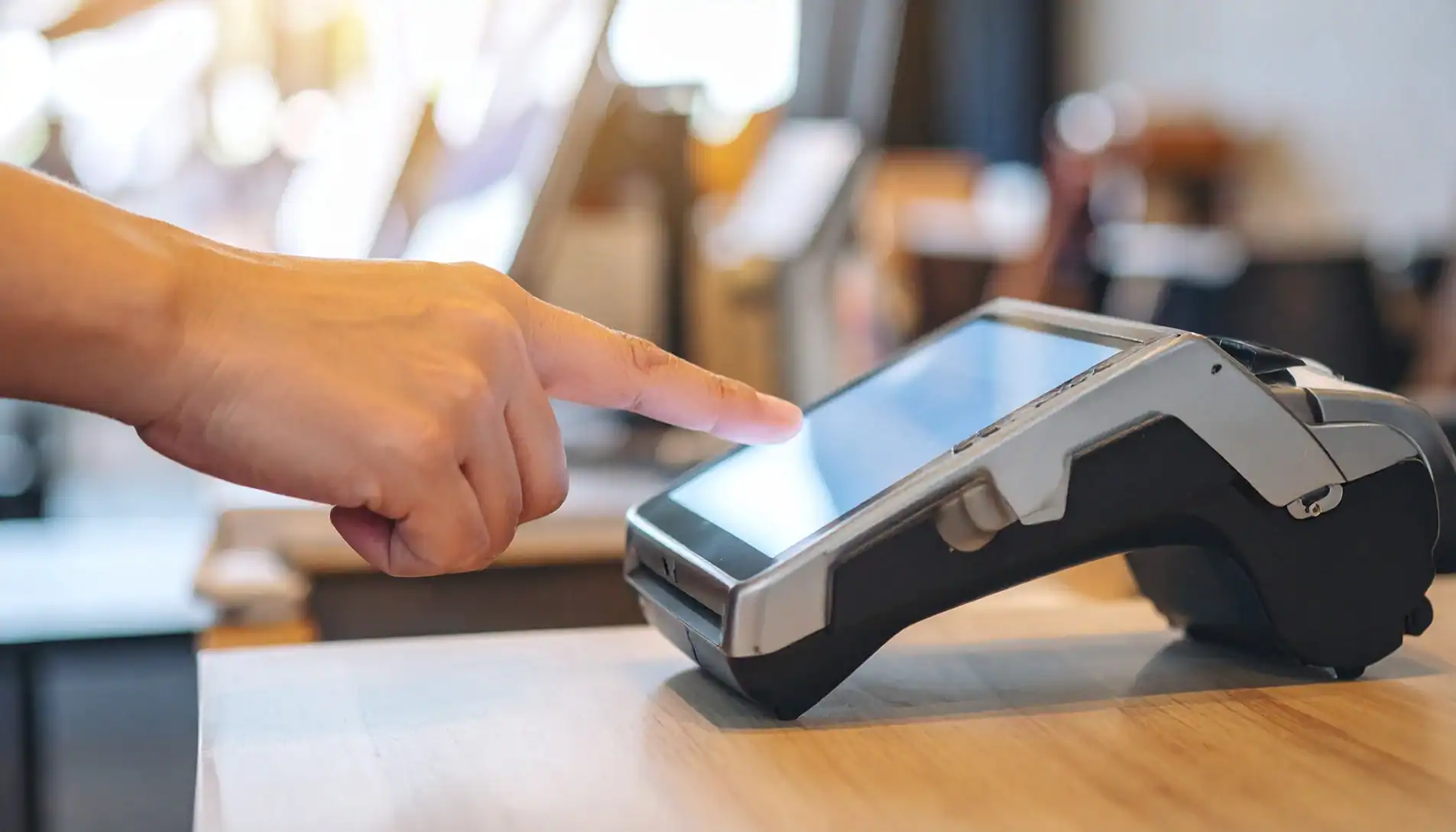
When a customer swipes, taps, or keys in their card, the transaction gets sent to the payment network—Visa, Mastercard, Discover, or Amex. The network checks with the customer’s bank to confirm funds are available and the card is valid. If everything checks out, the transaction gets approved. Usually takes two or three seconds.
Once approved, funds get batched and sent to your merchant account. Depending on your setup, you’ll see that money in your business bank account within one to two business days. Some processors hold funds longer, but that just hurts your cash flow for no good reason.
Here’s where it gets messy for a lot of businesses. The processor’s markup is what changes your effective rate from reasonable to ridiculous. Interchange fees—the amount that goes to banks and card networks—are mostly the same no matter who you use. That’s usually around 1.5% to 2.5% depending on card type. What changes is what your processor adds on top.
If you’re paying 6% or 7% on transactions, it’s not because interchange went up. It’s because your processor is charging you 3% to 4% more than they should. And if your statements are confusing enough that you can’t tell what you’re actually paying, that’s intentional. Complexity hides profit.
The best platform to accept credit card payments shows you exactly what you’re paying in fees. Transparent pricing means you see the interchange cost and the processor’s markup separately. No bundling. No tiered pricing that downgrades half your transactions into a higher rate category. Just honest numbers.
Most small businesses in Maryland, Virginia, and DC are paying somewhere between 2.5% and 4% if they have a decent processor. But we see plenty paying 5%, 6%, even 7% because they signed a contract years ago and never looked at it again. That adds up fast when you’re processing thousands of dollars a week.
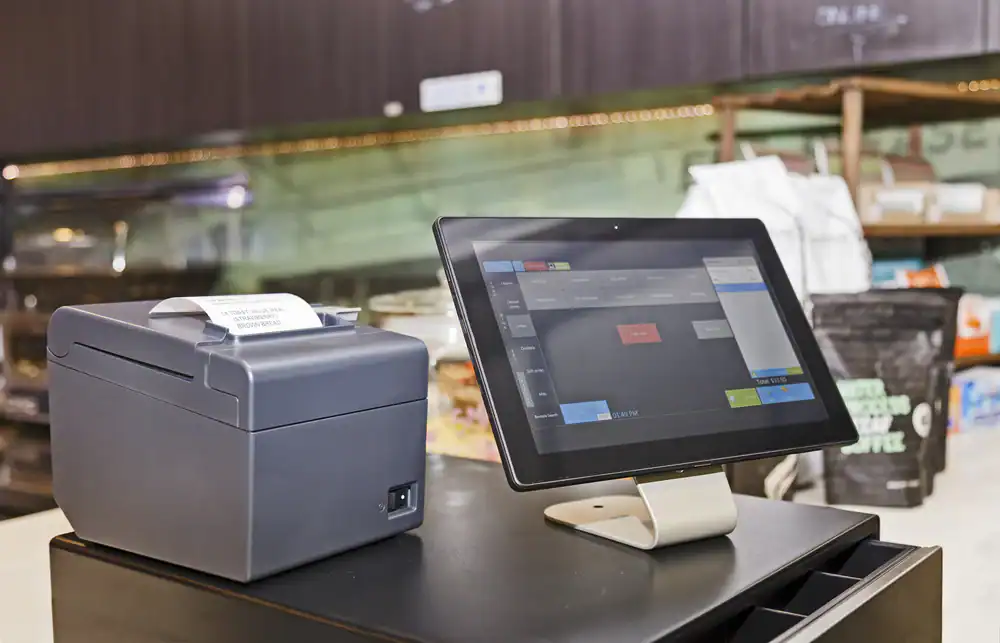
Your POS system is more than a card reader. It’s how you track inventory, manage sales, run reports, and keep your business organized. A good POS for small business integrates with your accounting software, handles multiple payment types, and doesn’t crash when you need it most.
The problem is that a lot of POS systems are built for one type of business and sold to everyone. A restaurant needs table management and kitchen ticket printing. A retail store needs barcode scanning and inventory tracking. A contractor needs mobile invoicing and wireless payment acceptance. One size doesn’t fit all.
When you’re evaluating a credit card payment system, ask what happens when something goes wrong. Can you get a real person on the phone in under five minutes? Do they charge you extra for customer support? What’s the process for disputing a chargeback or handling a refund?
POS system integration matters more than most business owners realize. If your payment system doesn’t talk to your accounting software, you’re manually entering transactions at the end of every day. That’s time you don’t have and mistakes you don’t need.
Look for systems that integrate with the tools you already use—QuickBooks, Xero, inventory management platforms, e-commerce sites. The more your systems talk to each other automatically, the less time you spend on administrative work and the more time you have for actually running your business.
Hardware reliability is non-negotiable. Card readers that lose connection mid-transaction, terminals that freeze during checkout, receipt printers that jam every other day—these aren’t minor inconveniences. They’re revenue killers. Every failed transaction is a customer who might not come back.
The easiest way to accept credit cards is with hardware that’s built for daily commercial use, not consumer-grade equipment that breaks after six months. That means investing in terminals designed for high transaction volumes, readers that work reliably in different environments, and backup options when your primary system goes down.
Security is another piece that gets overlooked until it’s too late. Data breaches from outdated credit card processing software can be catastrophic for small businesses. You need encryption, tokenization, and PCI compliance built into your system—not as expensive add-ons, but as standard features.
Mobile payment terminals have become essential for businesses that operate outside a traditional counter setup. Contractors, landscapers, delivery services, home service providers—if you’re going to the customer instead of them coming to you, you need a way to take payments on the spot. That means wireless readers that connect reliably, battery life that lasts through a full day, and software that works on your phone or tablet.
Want live answers?
Connect with a Merchant Pro Inc expert for fast, friendly support.
Technical issues with payment processing fall into three categories: connectivity problems, hardware failures, and software glitches. All three will happen eventually. What matters is how quickly you can fix them and how much revenue you lose in the meantime.
Connectivity issues are the most common. Your terminal needs internet to process transactions. If your Wi-Fi drops, your Ethernet cable gets unplugged, or your cellular connection cuts out, you can’t take payments. Having a backup connection method—wired and wireless options—keeps you running when one fails.
Hardware failures happen. Card readers wear out. Terminals get dropped. Receipt printers run out of paper at the worst possible time. The businesses that handle this well have backup equipment on hand and know exactly who to call when something breaks.

Declined transactions aren’t always the customer’s fault. Sometimes it’s insufficient funds or an expired card. Other times it’s a network error, a processing timeout, or a fraud filter that’s too aggressive.
When transactions start failing, the first step is figuring out why. Is it one card or all cards? Is it your terminal or your processor? Is it happening at one location or across all your systems? The faster you can narrow down the cause, the faster you can fix it.
Soft declines are temporary—usually caused by technical glitches or temporarily insufficient funds. You can retry these transactions. Hard declines are permanent—suspected fraud, invalid card numbers, or cards that have been reported lost or stolen. Don’t retry these. Tell the customer to contact their card issuer.
Processing outages happen. Power failures, internet disruptions, technical problems on the processor’s end—any of these can shut down your ability to take payments. The businesses that handle outages well have a plan. That means knowing how to process manual transactions, having alternative payment methods available, and communicating clearly with customers about what’s happening.
If your payment system fails during a busy period, every minute counts. You need a processor with reliable support—real people who answer the phone fast and can troubleshoot issues without putting you through three departments. Local support makes a difference when you’re in Maryland, Virginia, or DC and need someone who understands your market and can get to you if necessary.
Chargebacks are another common problem that most businesses don’t understand until they get hit with one. A chargeback happens when a customer disputes a transaction with their bank and requests a refund. Your processor withdraws those funds from your account and holds them in escrow while you prove you had authorization to charge the card and completed the services as described.
Visa and Mastercard give customers 120 days from the sale or delivery to file a chargeback. American Express and Discover give them a full year. That means a transaction you processed six months ago can suddenly come back as a dispute, pulling money out of your account with no warning.
The best way to handle chargebacks is to prevent them. That means clear communication with customers, detailed receipts, proof of delivery, and authorization documentation. When chargebacks do happen, you need a processor who helps you dispute them—not one who automatically sides with the customer and leaves you holding the loss.
Most business owners have no idea what they’re actually paying for credit card processing. The statements are confusing. The fees change month to month. And when you call for help, you’re on hold for 30 minutes just to get transferred three times.
Transparent pricing means you see exactly what you’re paying and why. Interchange-plus pricing shows you the interchange cost (what goes to banks and card networks) and the processor’s markup separately. No bundling. No tiered structures that downgrade transactions into higher rate categories. Just honest numbers.
Tiered pricing is where processors make their money. They advertise a low “qualified rate”—maybe 1.79%—but don’t tell you that most of your transactions won’t qualify for that rate. Instead, they get downgraded to “mid-qualified” at 2.9% or “non-qualified” at 3.79%. Suddenly your effective rate is double what you thought you were paying.
Here’s how that plays out in real numbers. If you process $50,000 a month at an effective rate of 3.5%, you’re paying $1,750 in processing fees. If your effective rate is actually 6% because of downgrades and hidden fees, you’re paying $3,000. That’s $1,250 a month—$15,000 a year—that you’re losing to a pricing structure designed to confuse you.
The businesses that save money on processing are the ones who understand their statements and ask questions. What’s your effective rate across all transactions? What fees are you being charged beyond the advertised rate? Are there monthly minimums, PCI compliance fees, statement fees, or batch fees that weren’t disclosed upfront?
Switching processors sounds like a hassle, but it’s usually simpler than staying with one that’s overcharging you. Most processors can migrate your data, transfer your customer information, and get you up and running in a few days. And if you’re in Maryland, you’re protected by House Bill 777, which caps cancellation fees at $500 and eliminates penalties once your contract auto-renews.
That legislation exists because too many businesses were getting locked into expensive contracts with cancellation fees that ran into the thousands. Now, if you’re not happy with your processor, you can leave without getting hit with financial penalties designed to keep you trapped.
The best platform to accept credit card payments is one that treats you like a partner, not a revenue source. That means transparent pricing, reliable support, equipment that works, and a relationship with someone who picks up the phone when you call.
You don’t need a technical background to set up payment processing that actually works. You need a processor who understands your business, equipment that’s built for daily use, and support that shows up when something goes wrong.
The easiest way to accept credit cards is with a system designed for how you actually operate—not a generic solution that assumes every business is the same. That means evaluating your needs, asking the right questions, and choosing a processor who’s transparent about pricing and committed to helping you succeed.
If you’re in Maryland, Virginia, or DC and you’re tired of confusing statements, hidden fees, and support teams that disappear when you need them, we’ve been helping local businesses process payments efficiently for over 30 years. Real people. Local support. Transparent pricing.
Summary:
Share: