Contact Info
DMV small businesses face evolving payment expectations in 2026. From biometric authentication to contactless technology, understanding these trends protects your bottom line and keeps you competitive.
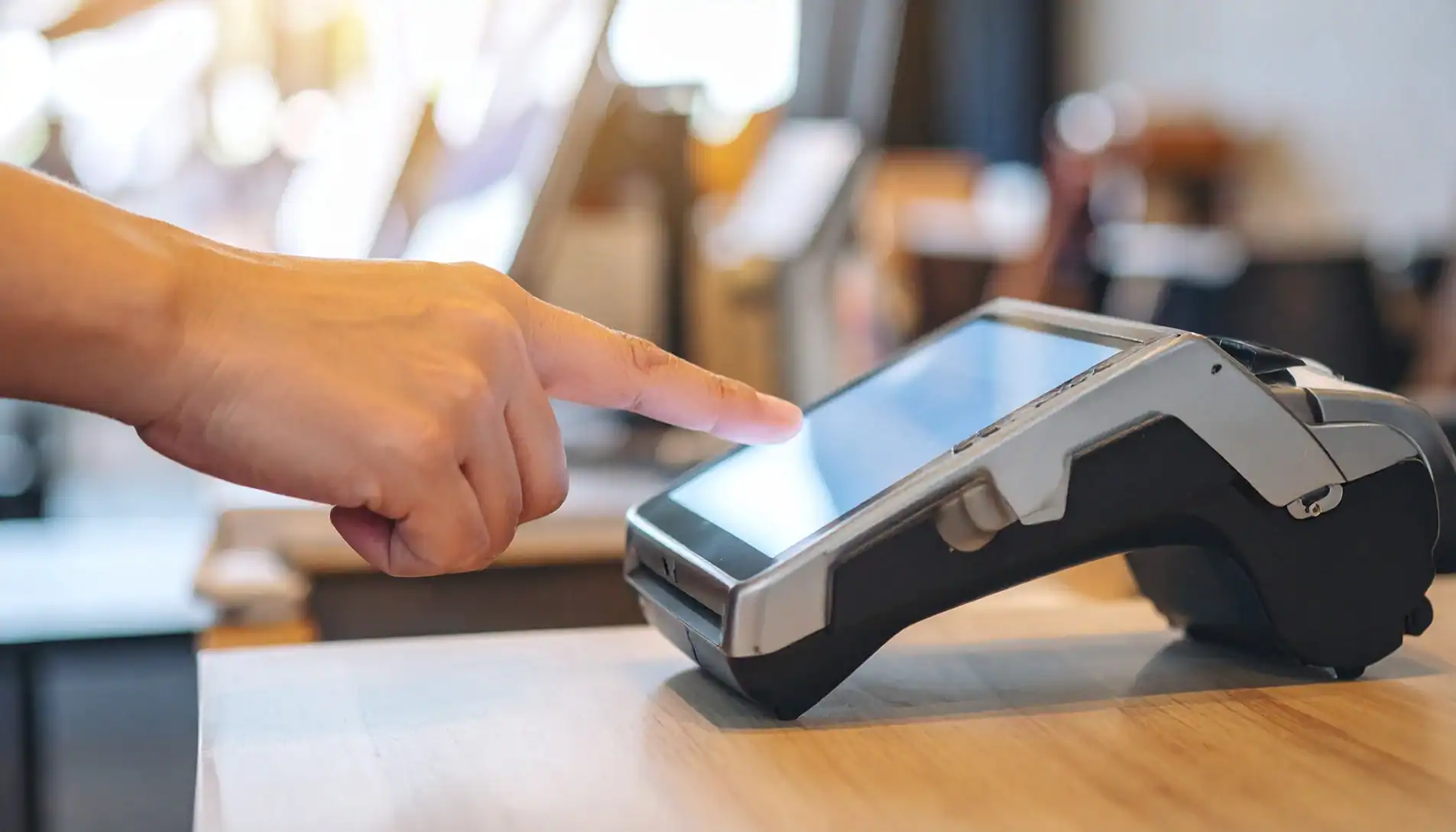
Walk into any coffee shop, retail store, or restaurant in DC, Maryland, or Virginia, and you’ll see it. Customers reaching for their phones instead of their wallets. Cards hovering over readers instead of being inserted. The tap-and-go expectation isn’t coming—it’s already here.
Contactless payments are projected to hit 522 billion transactions worldwide by 2026, growing at 23% annually. That’s not a trend you can ignore. Your customers have been trained by Apple Pay, Google Pay, and their own credit cards to expect fast, touchless transactions. When your system doesn’t support it, the friction shows.
The shift matters for more than convenience. Contactless technology processes faster, which means shorter lines during your busy hours. It reduces wear on your card readers. And it’s become the baseline expectation, especially for customers under 40 who’ve largely abandoned cash and rarely carry physical cards anymore.
If you’re still using older card readers that only accept chip or swipe, you’re creating unnecessary friction. Customers notice. They might not say anything, but when they have to dig for a physical card or wait for a chip transaction to process, you’ve added seconds that feel like minutes during a busy lunch rush or Saturday afternoon.
Contactless transactions typically process in under two seconds. Compare that to chip transactions that can take 5-10 seconds, and the difference compounds fast when you’re handling dozens or hundreds of transactions daily. The speed improvement alone can increase throughput during peak hours, which directly impacts revenue for businesses with high customer volume.
But speed isn’t the only factor. Contactless payments use tokenization, which means the actual card number never touches your system. Instead, a one-time encrypted code handles the transaction. This reduces your liability if your system is ever compromised. You’re not storing sensitive card data that hackers can steal.
The infrastructure is also more durable. Traditional card readers wear out from constant insertion and swiping. Contactless readers have no moving parts and no contact points that degrade over time. Lower maintenance costs, fewer emergency replacements, and less downtime add up over the years.
For DMV businesses specifically, the adoption rate is higher than the national average due to the region’s tech-savvy population and higher median income. Your customers are already using contactless payments everywhere else. When your business is the exception, you’re the outlier they remember—and not in a good way.
The transition doesn’t require a complete system overhaul. Most modern payment processors offer contactless-enabled terminals at similar price points to traditional readers. If you’re already planning to upgrade equipment or switch processors, contactless capability should be non-negotiable in your requirements.
Apple Pay, Google Pay, and Samsung Pay aren’t novelties anymore. By 2026, these mobile wallets are expected to dominate the checkout experience, with digital wallet transactions becoming the preferred method for a significant portion of consumers. The convenience factor is undeniable—customers can leave their physical wallets at home and still complete purchases.
For small businesses in the DMV area, this shift has practical implications. The region’s high concentration of government workers, tech professionals, and educated consumers means mobile wallet adoption is higher here than in many other parts of the country. These customers have already moved beyond asking “Do you take Apple Pay?” to simply assuming you do.
The business case goes beyond meeting expectations. Digital wallet transactions typically have lower fraud rates because they require biometric authentication on the customer’s device—fingerprint or face scan—before the payment processes. That extra security layer happens on their end, not yours, but you benefit from fewer chargebacks and fraud claims.
Mobile wallets also eliminate the “I forgot my card” problem. How many times has a customer reached your register only to realize they left their wallet in the car or at home? With mobile payments, their phone becomes their payment method. You don’t lose sales to forgotten wallets or customers who don’t want to walk back to their car.
Integration is simpler than you might think. If your payment terminal already accepts contactless cards, it accepts mobile wallets—they use the same NFC technology. You don’t need separate equipment or additional monthly fees for mobile wallet acceptance. The capability is built into the same hardware that processes contactless card payments.
The data shows clear consumer preference. Surveys indicate that 48% of businesses now accept mobile wallet payments, and that number continues climbing. In metropolitan areas like DC, Maryland, and Virginia, where smartphone penetration is near-universal and tech adoption runs ahead of national averages, mobile wallets have become table stakes rather than nice-to-have features.
One consideration for small businesses: make sure your staff knows how to handle mobile wallet transactions. The process is simple, but customers occasionally need guidance, especially older demographics who are trying mobile payments for the first time. A quick “just hold your phone near the reader” goes a long way toward smooth transactions.
The payment landscape is consolidating around a few key methods: contactless cards, mobile wallets, and traditional chip transactions. Cash continues declining, especially in urban and suburban DMV areas. Checks are nearly extinct for retail transactions. Your payment acceptance strategy should reflect where customers are headed, not where they’ve been.
Want live answers?
Connect with a Merchant Pro Inc expert for fast, friendly support.
Biometric payments sound futuristic, but the technology is already here. Your customers use fingerprint or face recognition to unlock their phones and authorize Apple Pay or Google Pay transactions. That’s biometric authentication in action. The next phase extends that concept directly to the payment process itself.
The biometric authentication market is growing at 15.5% annually through 2026, and industry experts project biometrics will secure up to $3 trillion in digital payments. This isn’t experimental technology—it’s becoming mainstream infrastructure for payment security. The question isn’t whether biometrics will play a role in payments, but how quickly adoption accelerates.
For small businesses, biometric payments offer a solution to a persistent problem: fraud. Traditional payment security relies on something you have (a card) or something you know (a PIN). Biometrics add something you are—your fingerprint, your face, your palm print. That third factor is exponentially harder to fake or steal.

Credit card fraud cost businesses and consumers billions in 2024, with more than 450,000 reported cases. Every fraudulent transaction that hits your business creates multiple problems: you lose the merchandise or service, you pay chargeback fees, and you spend time dealing with disputes. Biometric authentication attacks this problem at the source.
When a customer authenticates a payment with their fingerprint or face, you have verifiable proof that the authorized cardholder approved the transaction. This makes friendly fraud—where customers claim they didn’t authorize a legitimate purchase—much harder to execute. The biometric authentication creates an audit trail that’s difficult to dispute.
The technology also stops card-not-present fraud, which has exploded with online shopping. Traditional card numbers can be stolen and used remotely. Biometric data can’t be used the same way. Even if someone steals card information, they can’t replicate the cardholder’s fingerprint or face to complete a transaction that requires biometric authentication.
For businesses processing higher-value transactions, the fraud protection becomes even more valuable. A single fraudulent $500 or $1,000 transaction can wipe out the profit from dozens of legitimate sales. Biometric authentication provides a defense layer that’s proportionally more valuable as transaction sizes increase.
The customer experience improves too. No more forgotten PINs, no more signing receipts, no more “Can I see your ID?” requests that slow down checkout. The customer simply verifies their identity with a quick fingerprint scan or face recognition, and the transaction completes. It’s faster than traditional authentication and more secure.
Current implementation varies by payment method. Mobile wallet transactions already use biometric authentication on the customer’s device. Biometric payment cards—credit cards with built-in fingerprint sensors—are rolling out in select markets. Palm-scanning payment systems are being tested by major retailers. The technology is moving from pilot programs to mainstream deployment.
For DMV small businesses, the immediate action isn’t necessarily adopting biometric payment cards or palm scanners. Those technologies are still emerging. The relevant move is ensuring your payment processing supports the biometric authentication already happening through mobile wallets and contactless payments. That infrastructure is mature, proven, and available now.
The security benefits extend beyond fraud prevention. Biometric authentication helps you meet PCI compliance requirements more easily because you’re not storing or transmitting sensitive authentication data. The biometric verification happens on the customer’s device or on a secure payment card. Your systems never touch the biometric data, which reduces your compliance burden and liability.
Payment security isn’t just about biometrics. The entire security landscape is evolving to address increasingly sophisticated fraud attempts. In 2026, 80% of global consumers reported being targeted by scam attempts in the past year. The criminals are getting better at their craft, which means your defenses need to keep pace.
AI-driven fraud prevention is becoming standard rather than optional. Modern payment processors use machine learning to analyze transaction patterns in real-time, flagging suspicious activity before it completes. These systems learn from billions of transactions across thousands of businesses, identifying fraud patterns that would be impossible for humans to spot manually.
The technology works in the background. When a transaction looks unusual—wrong location, unusual purchase amount, atypical buying pattern—the system can require additional authentication or flag it for review. This happens in milliseconds, fast enough that legitimate customers rarely notice, but effective enough to stop many fraudulent transactions before they process.
Tokenization has become universal for card-not-present transactions. Instead of transmitting actual card numbers, the system generates single-use tokens that are worthless if intercepted. This protects online transactions, phone orders, and any situation where the physical card isn’t present. For businesses that process payments through multiple channels, tokenization provides consistent security across all transaction types.
The DMV region faces unique security challenges due to its high concentration of government workers and contractors. These individuals are often targets for sophisticated phishing and social engineering attacks. When their payment information is compromised, your business can become collateral damage if you’re not using current security protocols.
Encryption standards have also strengthened. Point-to-point encryption means payment data is encrypted from the moment a card is read until it reaches the processor. Even if someone intercepts the data in transit, it’s unreadable without the encryption keys. This protects you and your customers from data breaches that happen during transmission.
Multi-factor authentication is expanding beyond just customer-facing transactions. Access to your payment processing systems, reporting dashboards, and administrative functions should require multiple verification steps. This prevents unauthorized access even if someone obtains a password through phishing or data breach.
Real-time monitoring and alerts give you visibility into your payment activity. Unusual transaction patterns, multiple failed authorization attempts, or sudden spikes in refund requests can indicate fraud or system compromise. Modern payment processors provide dashboards and alerts that help you spot problems early, before they become expensive disasters.
The regulatory environment is tightening too. PCI-DSS compliance requirements continue evolving, and penalties for non-compliance are increasing. Working with payment processors that handle compliance on your behalf reduces your risk and administrative burden. We maintain the security infrastructure, perform the audits, and ensure your systems meet current standards.
For small businesses, the practical takeaway is this: payment security is no longer something you can handle with basic precautions. The threat landscape is too complex and too dynamic. Your payment processing partner needs to provide enterprise-grade security that’s constantly updated to address emerging threats. That protection should be built into the service, not an expensive add-on.
The payment processing trends shaping 2026 are real, and they’re accelerating. Contactless technology is becoming universal. Biometric authentication is moving from novel to normal. Security threats are getting more sophisticated, and customer expectations keep rising. Your payment infrastructure needs to keep pace.
But here’s what matters most: the technology is only as good as the provider behind it. Processing fees, security features, and hardware capabilities all matter, but so does having someone who answers when your system goes down on a Saturday afternoon. So does transparent pricing without hidden fees buried in fine print. So does working with people who understand the DMV business environment and can actually help when you need it.
The best credit card processing solution for your business balances current capabilities with future readiness. You need systems that work reliably today while supporting the payment methods your customers will expect tomorrow. You need pricing that doesn’t eat your profits. You need security that protects you from fraud without creating friction for legitimate customers.
If you’re evaluating payment processing options or questioning whether your current provider is keeping up with these trends, we understand the specific challenges DMV small businesses face. We’ve built our business around transparent pricing, local support, and payment technology that actually works for businesses like yours.
Summary:
Share: